

To view the website in your native language click one of the flags
To view the website in your native language click one of the flags
One reason Briarwood, NY keeps showing up in buyer searches is that it offers a clearer answer to the question, “What will daily life feel like after closing?” than many places do.
Briarwood is a market where pricing, property type, and building quality vary more than many buyers expect. That is why a clear strategy matters — so you are comparing the right properties, understanding the true monthly cost, and avoiding decisions that only make sense on the surface.
Buying in Briarwood, NY should feel structured, not uncertain. My role is to help you make a clear decision at the right pace, with the right information behind it.
I narrow your search around budget, monthly cost, commute, and property type so you are not wasting time on listings that do not actually fit.
I help you understand what is typical in Briarwood, what is overpriced, and where negotiation still exists in today’s market.
Each property type behaves differently here. I help you understand financing, rules, and long-term implications before you commit.
From first conversation through closing, you move forward with clarity, not surprises.
Briarwood, NY rewards buyers who pay attention to how daily life, housing type, and monthly cost actually come together.
It is a neighborhood where the value proposition is practical: strong transit, central location, and a mix of housing options that allow buyers to enter the market without stretching into the highest price tiers nearby.
The reason people stay is not hype.
It is usability — the commute, the housing options, and the fact that the neighborhood continues to work after the search is over.
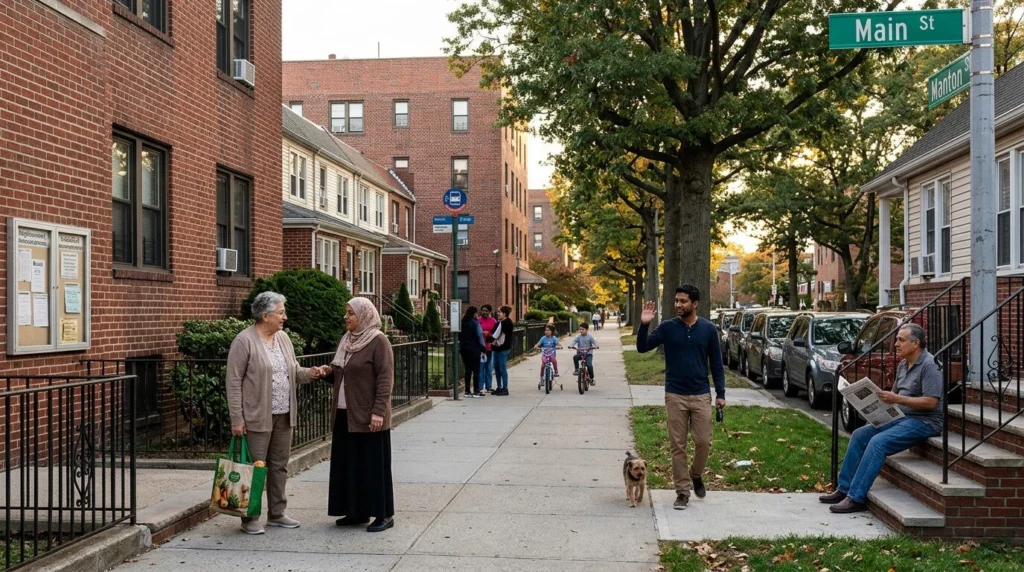
Briarwood offers a quiet, residential feel with a mix of co-ops, apartments, and smaller homes. Daily life is defined by convenience — access to transit, nearby retail, and neighborhoods like Jamaica and Kew Gardens without needing to plan around them.
The E and F trains reach Midtown in about 30–35 minutes, with additional access through Jamaica and the LIRR. Driving via the Van Wyck or Grand Central Parkway keeps most commutes within a 20–35 minute range depending on traffic.
Nearby Queens College and York College and parks like Forest Park create a steady, livable environment. For school zoning, use the NYC Department of Education school search. Local retail along Hillside Avenue supports everyday needs without over-reliance on cars.
Briarwood tends to fit buyers who want central Queens access, value compared to nearby neighborhoods, and the ability to compare co-ops, condos, and houses within the same search.
The Briarwood, NY housing market is shaped by one key factor:
it offers multiple entry points across property types, but each behaves differently.
Buyers are not looking at one unified market — they are comparing co-ops, condos, and small homes, each with its own pricing logic, financing requirements, and long-term implications.
That means the right purchase is less about timing the market and more about understanding where you fit within it.
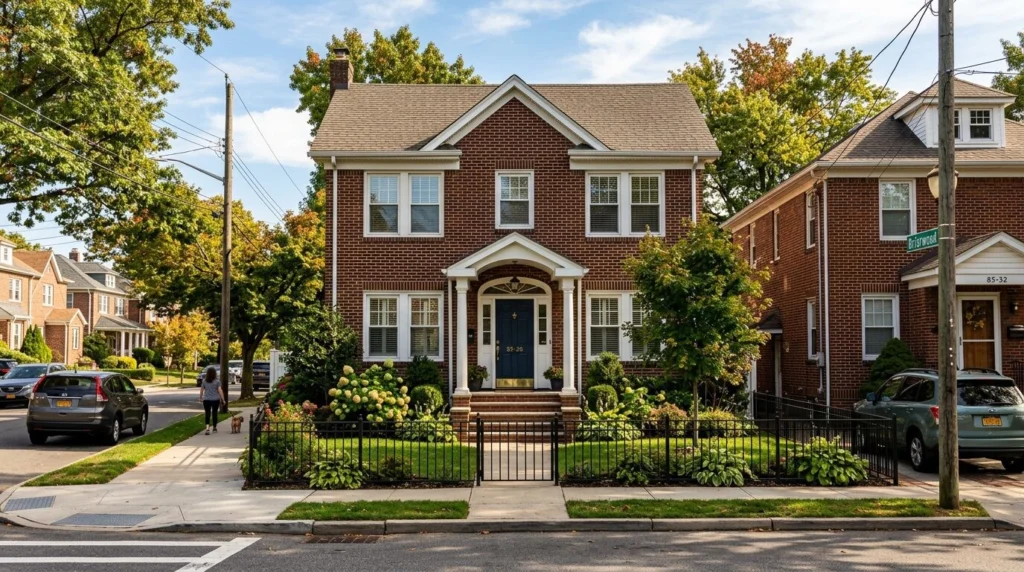
Co-ops typically offer the lowest entry price in Briarwood, often starting in the low-to-mid $200Ks depending on size and building quality. Condos sit higher, generally in the $400K–$700K range, while single- and two-family homes can range from the mid-$600Ks to $900K+ depending on condition and location.
Rental demand in Briarwood remains steady due to transit access and proximity to Jamaica and Kew Gardens. One- and two-bedroom units typically rent between $2,000–$3,200, which keeps investor interest consistent — though cash flow depends heavily on purchase price and financing structure.
Value in Briarwood is supported by location efficiency — access to major train lines, nearby commercial areas, and relative affordability compared to surrounding neighborhoods. Long-term stability tends to come from usability, not speculative appreciation.
Briarwood is a market where buyers benefit from being selective. The right deal is not just about price — it is about choosing the property type and structure that aligns with how you plan to live or hold the property over time.
Owning in Briarwood can bring long-term stability, especially with fixed-rate financing. While rents can increase over time, ownership allows you to lock in a large portion of your monthly cost, making it easier to plan financially over several years.
Instead of paying rent with no long-term return, ownership allows you to build equity over time. In a neighborhood like Briarwood — where appreciation tends to be steady rather than volatile — that equity can become a meaningful part of your overall financial picture.
Owning gives you more control over your space and your future. Whether that means customizing your home, holding the property long-term, or eventually renting it out, ownership provides flexibility that renting typically does not.
Briarwood tends to attract buyers who are thinking in terms of stability, access, and long-term usability. If you plan to stay for several years, ownership can begin to make more sense — not because it always beats rent immediately, but because it gives you consistency, control, and the potential to build equity in a market that historically rewards patience rather than speculation.
Another factor to consider is fallback value. Many buyers in Briarwood eventually convert their property into a rental or hold it as a long-term asset. Because rental demand is steady, that option can provide an additional layer of flexibility that pure renters do not have.
SCENARIO A: LOWER-PRICE ILLUSTRATIVE PURCHASE
SCENARIO B: MID-RANGE PURCHASE
In Briarwood, the ownership decision is rarely about beating rent immediately.
It is more often about choosing stability, long-term equity, and having a property that continues to work for you over time.
Most buyers do not struggle with finding listings.
They struggle with understanding the full picture — timeline, costs, and what happens after closing.
CLOSING TIMELINE
In Briarwood, closing timelines vary depending on property type.
Condos and houses can often close within 60–90 days, while co-ops may take longer due to board approval, sometimes extending to 90–120 days.
Understanding this upfront helps you plan your move, your financing, and your expectations.
Buying in Briarwood, NY tends to go more smoothly when the buyer is clear on two things before making an offer:
what they are buying and why it makes sense.
The biggest mistakes here usually come from mixing property types without adjusting expectations — comparing a co-op to a house, or focusing on price without understanding the true monthly cost.
A clean strategy keeps the process focused and prevents overpaying for the wrong type of asset.
For many buyers, yes.
Briarwood works well as a first purchase because it offers central Queens access, strong transit, and more approachable pricing than nearby neighborhoods.
You are not just choosing a property here.
You are choosing how your daily life will work after closing.
Start with budget clarity and real monthly cost — not just purchase price.
In Briarwood, co-ops often offer the lowest entry point, but they come with rules, board approvals, and maintenance considerations.
Condos provide more flexibility, while houses and two-family properties offer long-term control and potential rental use.
It depends on how you plan to use the property over time.
Some buyers prioritize simplicity. Others prioritize flexibility or future income.
The right decision is not about category —
it is about fit between the property and your long-term plan.
It can be — especially for buyers who want value, transit access, and a neighborhood that works day-to-day.
Briarwood is not driven by hype.
It is driven by practicality — and that tends to support more stable ownership decisions.
For one- to four-family homes, New York requires a Property Condition Disclosure Statement before contract.
This includes information about the structure, systems, and any known issues.
Co-ops and condos follow a different path — with more emphasis on building-level financials and documentation.
Lead paint, asbestos, and older-building issues
In Briarwood, many properties are older, which means buyers should pay attention to:
The goal is not to avoid older properties —
it is to verify condition and understand future costs.
Briarwood continues to attract buyers because the long-term value story is easier to understand than the short-term noise.
~4–5% annual growth, driven by central location and transit access
Rental yields ~5.5%–6.5%, especially for co-ops and two-family properties
Selective markets reward prepared buyers.
Clarity around costs and property type creates better opportunities than timing headlines.
Briarwood is not the right fit for everyone.
That is exactly why it works well for buyers who understand what they are looking for.
For many buyers, yes. Briarwood offers strong transit access, central location, and a range of housing options that support different budgets and lifestyles.
Co-ops, condos, single-family homes, and some two-family properties — giving buyers multiple entry points within the same neighborhood.
Selective but active. Well-priced, clean inventory moves, while properties with issues or unclear value take longer to sell.
It depends on timeline and goals. Renting may be cheaper short-term, but buying provides stability and long-term value.
Start with budget clarity, get pre-approved, and define your property type before touring listings.
Briarwood rewards buyers who understand the full picture location, numbers, and long-term fit.
Behind every successful sale is the same commitment — honest advice, deep local knowledge, and a relentless focus on her clients’ outcomes. Agatha doesn’t just know the Queens market. She has lived and breathed it for over 15 years.
To be the most trusted real estate resource in Queens — the agent every buyer, seller, and investor turns to first, knowing they'll get honest answers and exceptional results.
To guide every client through one of the most important financial decisions of their life with clarity, integrity, and the kind of local expertise that only 15+ years in Queens can provide.
Looking to sell instead? Sell your home in Briarwood, Queens, NY with Agatha Lubas.
Agatha Lubas, Licensed Associate Real Estate Broker with Keller Williams Realty Liberty, prepares a comparative market analysis (CMA) for your home. A CMA is a market opinion, not an appraisal.