

To view the website in your native language click one of the flags
To view the website in your native language click one of the flags
The reason people stay interested in Brooklyn, NY is not hype. It is usability — the commute, the housing stock, the retail rhythm, and the way life actually works once you are no longer browsing listings.
Brooklyn is not one market. A Park Slope co-op, a Williamsburg condo, and a two-family in Canarsie all require completely different underwriting. That is why the right strategy starts with understanding what you are actually trying to buy — not just where.
Buying in Brooklyn should feel structured — not overwhelming. My role is to help you make a clear decision in a market that can easily become confusing without the right framework.
We define your property type, budget, and micro-market early so you are not comparing completely different assets without realizing it.
I help you understand what is typical in your specific Brooklyn segment — not just borough-wide averages.
Co-ops, condos, and brownstones behave very differently. I make sure you understand the implications before you commit.
From first showing through closing, you move forward with clarity — not pressure.
Brooklyn rewards buyers who stop thinking in broad borough terms and start thinking in specific lifestyle fits.
The value here is not just location — it is how well the neighborhood supports daily life once you own the property.
Brooklyn offers everything from historic brownstone neighborhoods to high-density condo areas and more affordable outer sections. What matters is not the borough — it is how your specific neighborhood functions day-to-day.
Commutes range from 15–25 minutes in waterfront areas to 45–60 minutes in outer neighborhoods. The key question is not transit availability — it is whether your exact route works consistently.
From Prospect Park to Brooklyn Bridge Park, and from cultural institutions to local retail corridors, Brooklyn offers a full lifestyle ecosystem — but density, noise, and cost vary significantly by area.
Brooklyn fits buyers who want strong neighborhood identity and are willing to choose between space, convenience, and cost rather than expecting all three.
Brooklyn is a perfect example of why averages can mislead.
This is not one market — it is multiple pricing lanes depending on property type and neighborhood.
Co-ops offer lower entry points, condos higher flexibility, and brownstones or multifamily properties offer control — but at significantly higher cost.
Rental yields range from 4–5.5% in prime areas to 6.5–8% in emerging neighborhoods, with consistently strong demand near transit.
Transit access, strong neighborhood identity, and limited inventory continue to support pricing across Brooklyn.
Brooklyn is selective — not weak. Clean, well-understood inventory moves. Compromised properties get negotiated.
Ownership provides long-term stability in a market where rents continue to rise.
Ownership builds long-term value, especially in neighborhoods with strong demand.
Owning in Brooklyn often means more control, but also more responsibility depending on property type.
The complexity comes from property type. A co-op, condo, and brownstone all create very different ownership experiences — financially and operationally.
For many buyers, the real question becomes:
“Does owning here support my long-term plan, or am I better off renting and staying flexible?”
SCENARIO A
SCENARIO B
In Brooklyn, ownership is not about beating rent immediately.
It is about aligning with long-term stability and lifestyle fit.

Brooklyn is not difficult because of competition.
It is difficult because of complexity.
CLOSING TIMELINE
TAXES / CARRYING COST
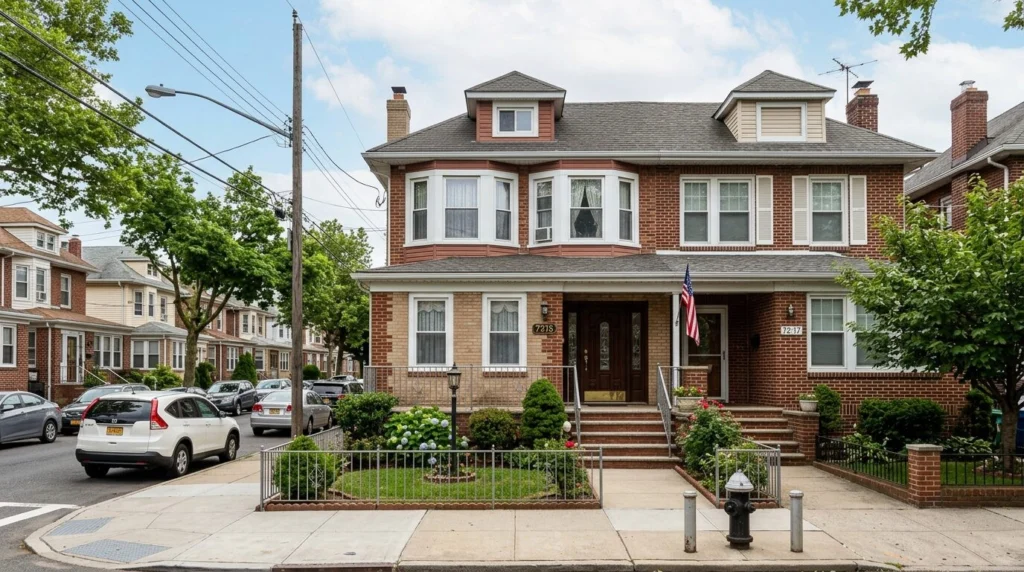
Buying in Brooklyn, NY tends to go more smoothly when the buyer is clear on two things before making an offer:
what they are buying and why it makes sense.
The biggest mistakes here usually come from mixing property types without adjusting expectations — comparing a co-op to a house, or focusing on price without understanding the true monthly cost.
A clean strategy keeps the process focused and prevents overpaying for the wrong type of asset.
For many buyers, yes.
But only when the property type, budget, and expectations are aligned.
Brooklyn gives you access to one of the most dynamic housing markets in the country —
but that also means you are choosing between very different ownership paths.
Start with budget and monthly cost — not just purchase price.
In Brooklyn, the difference between property types is not small.
Each one comes with different rules, financing requirements, and long-term implications.
It depends on how you want the property to function over time.
Some buyers prioritize simplicity.
Others prioritize flexibility or long-term control.
The right choice is not about category —
it is about fit between the property and your plan.
It can be — especially for buyers who understand the trade-offs.
Brooklyn rewards buyers who are clear about budget, lifestyle, and long-term use.
For one- to four-family homes in Brooklyn, New York requires a Property Condition Disclosure Statement before contract.
This includes information about structure, systems, and known issues —
but it does not replace inspection or due diligence.
What co-op and condo buyers need instead
Co-ops and condos rely less on seller disclosure and more on document review:
Skipping this step is one of the most common mistakes buyers make.
Brooklyn remains one of the most resilient housing markets because
demand is driven by real use — not just speculation.
Brooklyn shows ~4–6.5% appreciation, with stronger growth in emerging and waterfront areas.
Multifamily and two-family properties can deliver 5.5–8%+ yields, depending on location and structure.
Selective markets reward prepared buyers.
When demand remains strong but buyers are more careful, better decisions get made.
Brooklyn is not simple —
but for the right buyer, that complexity creates opportunity.
For many buyers, yes. Brooklyn offers strong demand, diverse housing options, and long-term value — but success depends on choosing the right neighborhood and property type.
Co-ops, condos, brownstones, and multifamily properties — each with different pricing, rules, and ownership experience.
Selective and active. Well-priced, clean inventory moves. Properties with issues or unclear value take longer.
It depends on timeline. Renting may be cheaper short-term, while buying supports long-term stability and equity.
Start with budget clarity, get pre-approved, and define your property type before touring.
Brooklyn rewards buyers who understand the full picture —
not just the listing, but the lifestyle, the numbers, and the long-term fit.
Behind every successful sale is the same commitment — honest advice, deep local knowledge, and a relentless focus on her clients’ outcomes. Agatha doesn’t just know the Queens market. She has lived and breathed it for over 15 years.
To be the most trusted real estate resource in Queens — the agent every buyer, seller, and investor turns to first, knowing they'll get honest answers and exceptional results.
To guide every client through one of the most important financial decisions of their life with clarity, integrity, and the kind of local expertise that only 15+ years in Queens can provide.
Looking to sell instead? Sell your home in Brooklyn, Brooklyn, NY with Agatha Lubas.
Agatha Lubas, Licensed Associate Real Estate Broker with Keller Williams Realty Liberty, prepares a comparative market analysis (CMA) for your home. A CMA is a market opinion, not an appraisal.