

One reason Middle Village, NY keeps showing up in buyer searches is that it offers a clearer answer to the question, “What will daily life feel like after closing?” than many places do.
Middle Village is one of those Queens neighborhoods buyers usually discover because they are looking for more space, quieter streets, and a stronger house market.
I help buyers navigate real estate in Middle Village with clear advice, sharp market context, and step-by-step support from pre-approval through closing. Whether you are looking at co-ops in Middle Village, condos in Middle Village, a single-family home, or houses for sale in Middle Village Queens with income potential, I help you focus on the right opportunities and avoid expensive guesswork.
Buying a home in Middle Village, NY should feel informed, not chaotic. My role is to help you make a smart decision at the right pace, with the right structure behind it.
I narrow your search around budget, total monthly comfort, commute, property type, and long-term fit so you are not wasting weekends on listings that never made sense.
I help you understand what is typical in the Middle Village, NY housing market, what looks overpriced, and where negotiation room may still exist.
Middle Village gives buyers real variety. That is a strength, but it also means the right move depends on financing rules, maintenance or common charges, taxes, building financials, yard or garage utility, and future resale potential.
From the first conversation through accepted offer, due diligence, and closing, I help you move forward with more confidence and fewer surprises.
Middle Village, NY rewards buyers who look past generic neighborhood labels and pay attention to how the day-to-day experience, housing mix, and monthly carrying costs line up.
Middle Village makes sense for buyers who care about space, residential character, and long-term usability more than they care about density or constant activity.
The reason people stay interested in Middle Village, NY is not hype. It is usability: the commute, the housing stock, the retail rhythm, and the way the neighborhood tends to function once you are no longer browsing listings.
Middle Village is a quiet, family-oriented residential neighborhood in central Queens with a long-established identity and population of approximately 32,000. In 2026 it offers tree-lined streets, well-maintained single-family homes, and a suburban pace while remaining within commuting distance to Manhattan.
In plain English, Middle Village, NY tends to make buyers feel like they are buying into a routine rather than just a set of walls.
The M train reaches Midtown in about 35–40 minutes, with connections to Brooklyn via the L train. Driving access via the BQE or LIE ranges 25–45 minutes depending on traffic.
District 24 schools, Juniper Valley Park, and Metropolitan Avenue retail define the daily experience. The neighborhood’s stability comes from long-term ownership and consistent local demand.
Middle Village fits buyers who want:
2026 Market Behavior
Middle Village shows steady 3.8–4.5% appreciation with strong demand for single-family homes and two-family income properties.
Co-ops, houses, and two-family properties behave differently in financing, cost, and resale. Buyers who treat them the same usually misprice the market.
Two-bedroom rents average $2,600–$3,000 with low vacancy (~3%), supporting stable long-term ownership decisions.
Owner-occupancy (~70%+) Residential identity Limited inventory
The Middle Village market is selective, not weak — strong properties move, compromised ones sit.
Fixed-rate ownership creates long-term stability.
Ownership builds long-term value exposure.
In Middle Village, this often means space, control, and long-term living.
Two-bedroom rents in Middle Village average $2,600-$3,000, competitive with Maspeth and slightly higher than Ozone Park due to better park access and schools. Vacancy remains low at 3%, with long-term tenants common in this established community. For an owner-occupant, that rent story matters because it shapes the rent-versus-own comparison and the likely fallback value if the property ever becomes a rental later. For an investor, it matters because stable tenant demand can sometimes be more valuable than a headline-grabbing appreciation number. In Middle Village, NY, the healthier long-term plays are usually the ones that still make sense on conservative rent assumptions, not optimistic ones.
Scenario A: lower-price illustrative purchase
Scenario B: recent median-sale benchmark
That means the ownership case in Middle Village is usually not, “Will this beat rent next month?” It is more often, “Do I want more stability, more control, potential long-term equity, and a home that fits my life for the next several years?”
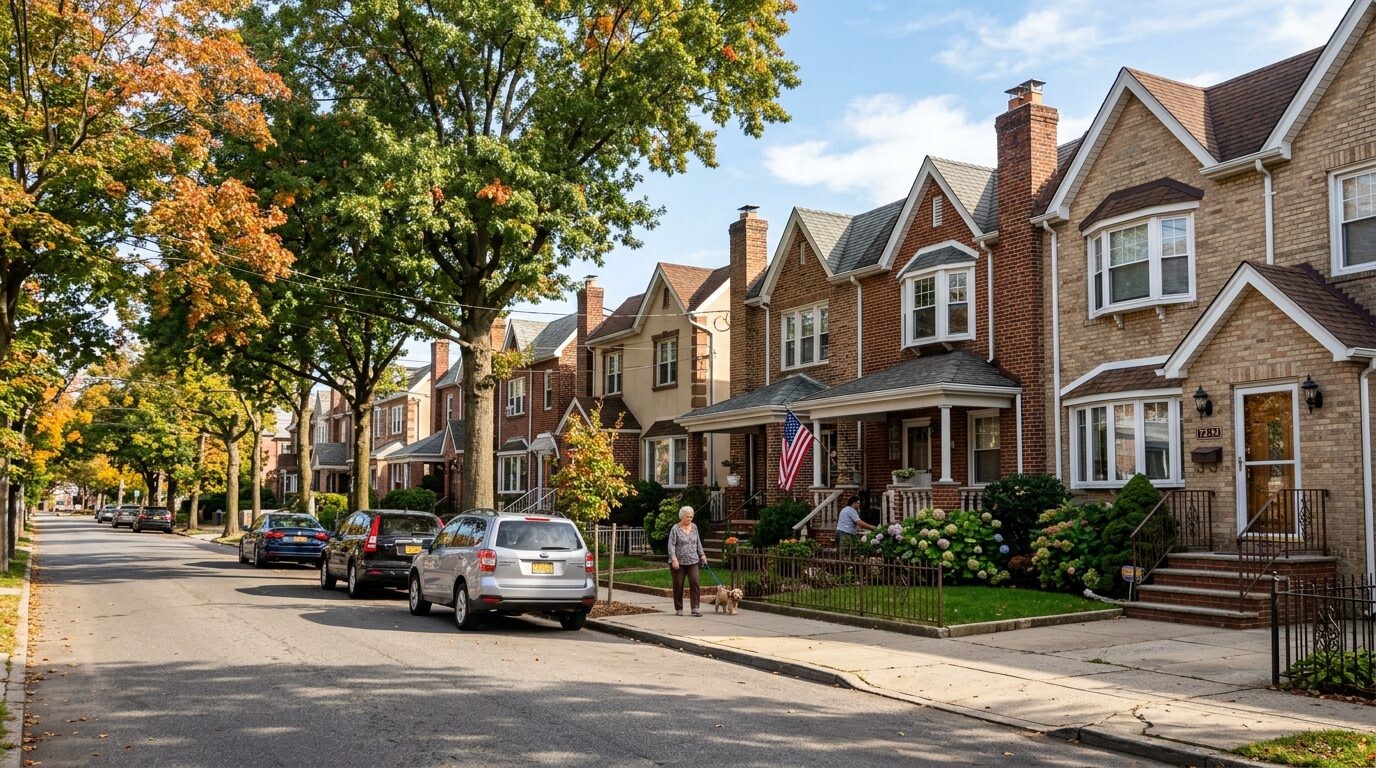
Most buyers moving into Middle Village, NY benefit from a very practical sequence: get the budget right, decide which housing type truly fits, and only then start touring seriously.
Typical Closing Timeline
Single-family and small multifamily closings in Middle Village typically average 45–65 days.
Co-op transactions, where applicable, can extend to 60–80 days depending on board review and documentation.
Property taxes, maintenance, and monthly carrying cost
Class 1 homes in Middle Village generally carry effective tax rates around 0.7–1.1% of market value.
Multifamily properties may include additional maintenance considerations, while co-ops (less common here than nearby areas) can include monthly fees depending on the building.
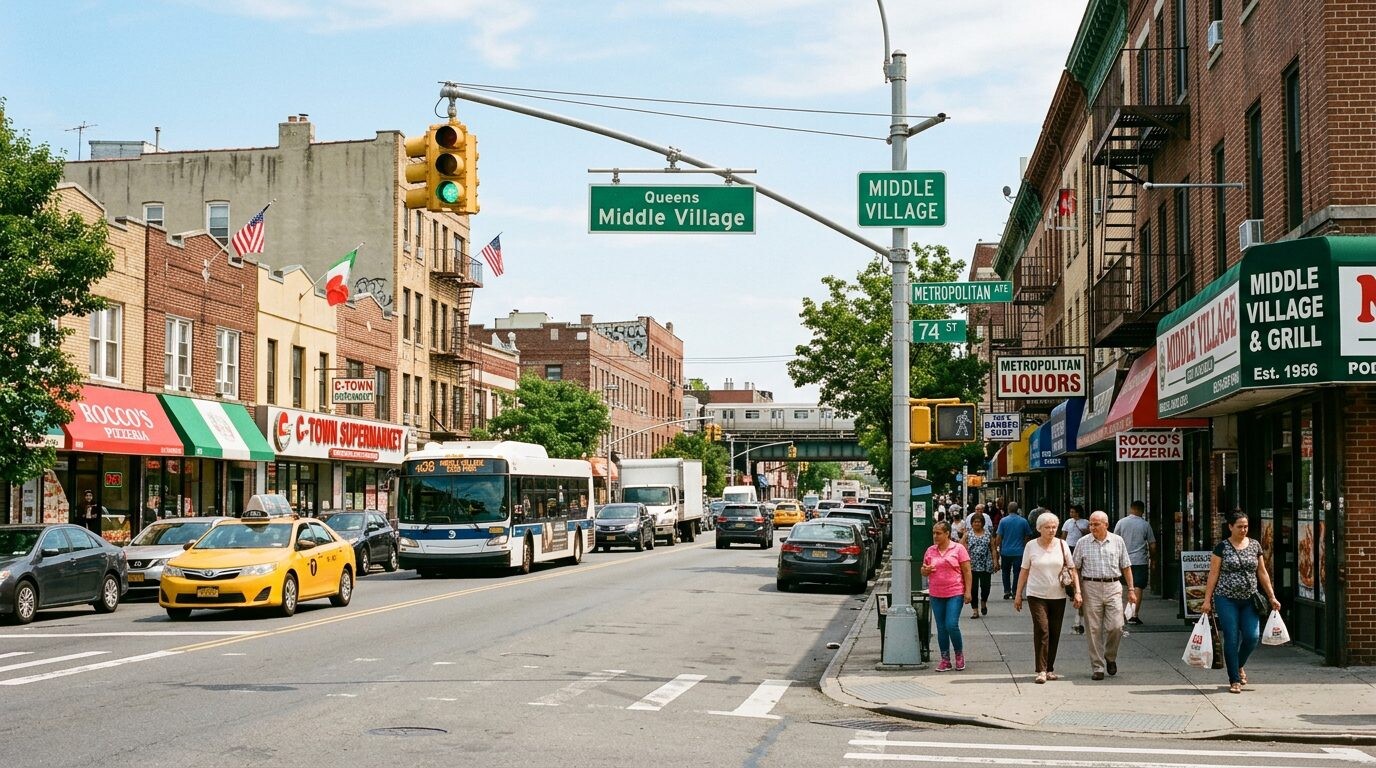
Buying in Middle Village is straightforward when the buyer stays consistent with property type and budget — and frustrating when they don’t.
Typical effective tax rate: 0.75–1.1%
Annual taxes: ~$6,500–$9,500 on ~$900K homes
For many buyers, yes. Middle Village can be a strong first-purchase option because it offers quieter residential streets, proximity to parks like Juniper Valley Park, and a housing mix that includes single-family and multifamily homes with long-term utility.
Buying your first home in Middle Village can feel exciting and overwhelming at the same time. That is normal. My job is to help you understand the process, the costs, and the tradeoffs so you can make a decision you still feel good about after closing.
Start with budget clarity, pre-approval readiness, and a realistic understanding of the local inventory and monthly costs.
That depends on financing, flexibility, building rules, and what you want your home to do for you over the next five to ten years.
It can be, especially for buyers who want Queens access, transit convenience, and multiple housing-type options in one neighborhood search.
For one- to four-family homes, New York’s current Property Condition Disclosure Statement should be delivered before the buyer signs the binding contract.
Lead paint, asbestos, and older-building issues
Pre-1978 housing requires lead disclosure and inspection opportunities.
Steady, moderate growth with strong end-user demand
Two-family homes: 5.5–6.5% potential yields
Selective markets reward prepared buyers — not rushed ones
Middle Village is not for everyone — which is exactly why it works so well for the right buyer.
For many buyers, yes. Middle Village offers a quieter residential environment, access to green space like Juniper Valley Park, and a mix of single-family and small multifamily homes that appeal to buyers focused on long-term stability and practical living.
Middle Village is primarily known for single-family homes, brick rowhouses, and small multifamily properties. Compared to nearby neighborhoods, there are fewer large condo or co-op buildings, which makes it especially appealing for buyers looking for more space or potential rental income.
Inventory in Middle Village tends to stay relatively tight, with homes often attracting steady demand due to the neighborhood’s residential feel and limited turnover. Pricing is typically more stable than highly volatile markets, making it attractive for buyers thinking long-term rather than short-term speculation.
Renting may be cheaper in the short term, but buying can make more sense for buyers planning to stay longer, especially those interested in building equity or owning a property with income potential. The decision usually depends on your timeline, financing, and how you value stability versus flexibility.
Start with a clear budget and mortgage pre-approval, then narrow your search based on property type and long-term goals. From there, the process becomes much more focused and efficient, helping you avoid wasted time and make stronger offers.
Middle Village, NY rewards buyers who understand the full picture: lifestyle, numbers, and long-term fit.
Behind every successful sale is the same commitment — honest advice, deep local knowledge, and a relentless focus on her clients’ outcomes. Agatha doesn’t just know the Queens market. She has lived and breathed it for over 15 years.
To be the most trusted real estate resource in Queens — the agent every buyer, seller, and investor turns to first, knowing they'll get honest answers and exceptional results.
To guide every client through one of the most important financial decisions of their life with clarity, integrity, and the kind of local expertise that only 15+ years in Queens can provide.
Looking to sell instead? Sell your home in Middle Village, Queens, NY with Agatha Lubas.