
RICHMOND HILL SELLER GUIDE
Selling a House in Richmond Hill Queens: Pricing, Preparing and Disclosing an Older Home
Quick Answer
To sell a house in Richmond Hill, Queens, start with a CMA that compares homes of the same type, legal unit count and condition, then gather your legal-use, permit and systems records. Fix what inspectors will flag, present the architecture honestly, list on OneKey MLS, deliver the required disclosures, and budget for NYS and NYC transfer taxes.
This guide is for owners who are thinking about selling a house in Richmond Hill Queens, especially a house the family has owned for a long time. Many Richmond Hill homes are detached wood-frame houses from the late 1800s and early 1900s or 1920s two-family houses, and many have been updated piece by piece over decades. That history is part of the appeal for buyers. It is also what their attorneys, inspectors and appraisers will examine closely.
Selling well here is mostly about preparation. The owner who knows the house’s legal use, can show when the roof, boiler and wiring were updated, and prices against truly comparable sales usually has a calmer negotiation than the owner who lists first and answers questions later.
As a Licensed Associate Real Estate Broker serving Queens, I help sellers plan the sale from pricing through closing, in English or Polish, whichever is more comfortable. Below you will find how buyers judge Richmond Hill homes, how a CMA is built for an unusual house, which records to gather, how to decide what to repair, how marketing and disclosures work, what a sale costs, and how to compare offers. When you are ready to talk about listing, the page on how to sell your home in Richmond Hill with Agatha explains the listing process.
Richmond Hill at a glance for sellers
| Topic | What sellers should know |
|---|---|
| Location | South-central Queens, south of Forest Park, between Kew Gardens, Woodhaven, Jamaica and South Richmond Hill; Atlantic Avenue is the commonly used line with South Richmond Hill; edges are informal, so check NYC Department of City Planning community district maps for a specific address |
| Borough / ZIP | Queens, New York City; mainly ZIP 11418, with some edge blocks in neighboring ZIP codes, so confirm the ZIP code for each address with USPS |
| Housing stock buyers see | Detached Victorian and early-1900s frame houses, 1920s attached and semi-attached one- and two-family houses, apartment buildings with some co-ops, mixed-use buildings on the avenues |
| Transit buyers ask about | J/Z above Jamaica Avenue (104 St, 111 St, 121 St); A along Liberty Avenue to the south; E/F at Kew Gardens–Union Tpke; no LIRR station in use (nearest: Kew Gardens, Jamaica) |
| Features buyers notice | Porches, original woodwork, lot size, driveways and garages, distance to Forest Park and to the elevated line |
| Historic status | Part of the neighborhood is the National Register-listed Richmond Hill Historic District; a few buildings are individual NYC landmarks |
| Seller taxes | NYS real estate transfer tax and NYC Real Property Transfer Tax, customarily paid by the seller |
| Records buyers’ attorneys request | CO or Letter of No Objection, DOB permits and violations, leases if tenant-occupied, oil-tank documentation, repair invoices |
How do buyers evaluate a house in Richmond Hill, Queens?
Buyers in Richmond Hill, Queens weigh four things: what the house legally is (one-family, two-family or more), the condition of its major systems, the character and lot that make it different from newer housing, and its location relative to Forest Park and the J/Z, A or E/F lines. Price follows from how a house scores on all four.
Different buyers, different questions
Buyers of a detached Victorian usually want space, a yard and period detail, and they ask about wiring, heating, roof and the cost of keeping a large frame house painted and dry. Buyers of a two-family house want to live in one unit and rent the other, so they ask whether the second unit is legal, what it would rent for and who pays which utilities. Investors look at the rent roll, the leases and the building’s records. Renovators look past finishes at structure and zoning. Your listing must answer each group’s first question quickly.
What adds appeal and what raises questions
Features that tend to draw interest include a documented legal unit count, a recently replaced roof or boiler, upgraded electrical service, a private or legally shared driveway, a garage, original porches and woodwork in good condition, and a short walk to a station or to Forest Park. Features that raise questions include unapproved basement or attic apartments, siding of unknown material, an oil tank with no paperwork, open DOB violations, and a facade directly facing the elevated structure on Jamaica Avenue. None of these ends a sale, but each needs a plan before buyers find it.
How do you price a house in Richmond Hill?
When selling a house in Richmond Hill Queens, you set the price by building a comparative market analysis around recent sales of homes with the same building type, legal unit count, lot size and condition, then adjusting for what makes your house different. With older and one-of-a-kind houses, choosing the right comparables matters more than any single number.
What a CMA is, and what it is not
A comparative market analysis, or CMA, is a real estate broker’s professional opinion of value based on relevant market evidence, such as recent sales, active and pending listings and properties that failed to sell. It is not an appraisal and does not guarantee a sale price. An appraisal is a separate valuation prepared by a licensed appraiser, usually for the buyer’s lender. For a general overview of valuation in the borough, see what is my Queens home worth.
Why comparables are harder for Victorians
A large detached Victorian on a deep lot may have few true matches nearby in a given period. A CMA then has to reach further in time, include nearby areas with similar frame houses such as Woodhaven and Kew Gardens, and adjust carefully for lot size, condition and the scope of past updates. Comparing a restored Victorian with a 1920s attached two-family only because both sold on the same street produces a misleading range.
Legal configuration drives value
A legal two-family house and a one-family house with an unapproved second apartment are different products. Buyers’ lenders count rent only from legal units, and appraisers value the house as the records describe it. Pricing as if an unapproved unit were legal usually leads to a failed appraisal or a renegotiation late in the deal. Price what the records support, and describe any extra space as what it legally is.
| Pricing factor | Why it matters in Richmond Hill | How a CMA should treat it |
|---|---|---|
| Building type | Detached Victorian, attached 1920s house and co-op apartment attract different buyers | Compare like with like; do not mix types |
| Legal unit count | Sets financing, rental income and appraisal approach | Use only legal units; note unapproved space separately |
| Lot size and parking | Large lots, driveways and garages are less common closer to the avenues | Adjust for lot area, frontage and documented driveway rights |
| Systems and condition | Old wiring, boilers and roofs are what buyers’ inspectors focus on | Adjust for documented updates and for deferred repairs |
| Historic character | Original porches and details draw some buyers; poor condition deters others | Value restored detail; do not price on character alone |
| Location within the neighborhood | Distance to Forest Park, J/Z stations and the elevated structure | Prefer comparables with a similar micro-location |
Key Takeaways
- A CMA is a broker’s opinion of value, not an appraisal and not a guarantee.
- Price what the legal records support; an unapproved apartment is not a rental unit.
- One-of-a-kind Victorians need carefully chosen comparables and explicit adjustments.
- Documented system updates are worth more than undocumented ones.
Wondering where your Richmond Hill house would land?
I can prepare a complimentary CMA built on homes of the same type and legal configuration, so you see a realistic range before you decide anything.
What records should you gather before selling a house in Richmond Hill Queens?
Before selling a house in Richmond Hill Queens, gather the documents that prove legal use, show permitted work, and explain the age and condition of the major systems. Buyers’ attorneys will ask for most of them after an offer is accepted; having them ready shortens attorney review and reduces surprises.
Legal-use records
A Certificate of Occupancy (CO) is the NYC Department of Buildings document stating a building’s legal use and number of dwelling units. The DOB explains on its Certificate of Occupancy page that buildings constructed before 1938 generally did not need a CO unless a later alteration changed their use, exits or occupancy. Many Richmond Hill houses fall into that group. For them, a Letter of No Objection from the DOB can confirm the existing legal use. If your house has neither, ask your attorney early which records will satisfy a buyer’s attorney and lender.
Permits, violations and past work
Search DOB records for open permits, complaints and violations, and check for unpaid penalties. Work completed decades ago, such as a rear extension, a dormer or a converted attic, may have permits that were filed but never signed off. Closing those out takes time, sometimes months, so start before listing and ask an expediter or architect to estimate the timeline for your specific items.
Landmark and historic status
If your house is inside the Richmond Hill Historic District, which was listed on the National Register of Historic Places in 2019, you may mention that in marketing, accurately. National Register listing generally does not by itself require city approval of a private owner’s exterior work. A building designated by the NYC Landmarks Preservation Commission, such as the Richmond Hill Republican Club at 86-15 Lefferts Boulevard, is regulated differently. Confirm your status on the LPC’s map and with the NYS Historic Preservation Office before describing it, including whether the house is listed as a contributing building in the district.
Systems, environmental and lot records
- Roof, boiler or furnace, water heater and electrical upgrade invoices, with dates and permits where required.
- Oil-tank removal or abandonment paperwork if the house converted to gas.
- Any asbestos, lead or mold testing and abatement records.
- A survey, plus any recorded shared-driveway or easement agreement.
- Recent property tax and water bills, and any exemptions you receive.
Tenants and income records
If one unit of a two-family house is rented, assemble the lease, rent history, security-deposit details and utility arrangements. Existing leases generally continue after a sale. Whether a unit can be delivered vacant depends on the tenancy and New York law, so decide with your attorney before you promise it in a contract. The rules depend on the specific tenancy, including any rent-regulation status, which your attorney or NYS Homes and Community Renewal can confirm.
Inherited and long-held houses
Many Richmond Hill houses pass through estates. To sell an inherited house, the executor or administrator generally needs authority from the Queens County Surrogate’s Court, such as letters testamentary or letters of administration, before signing a contract. An estate attorney can confirm what is needed, and a CPA can explain tax considerations. Our probate real estate page outlines how estate sales typically proceed.
Not sure what is missing from your file?
We can review your house’s public records and your documents together, so open permits or gaps are handled before buyers ask.
Should you repair, restore or sell an older Richmond Hill house as-is?
Repair the items an inspector or lender will flag, present the rest honestly, and leave major restoration to the next owner unless it clearly pays back. In an older frame house, the right preparation budget is usually smaller and more targeted than owners expect.
A preparation framework
| Item | Typical choice before listing | Reason |
|---|---|---|
| Active roof or gutter leaks | Repair | Water damage spreads in frame houses and alarms inspectors |
| Electrical hazards, exposed or overloaded wiring | Repair with a licensed electrician | Can affect a buyer’s insurance and lender |
| Rotted porch boards, loose railings, failing steps | Repair | First impression and a likely inspection item |
| Boiler service | Service and keep the record | Low cost; shows maintenance |
| Open permits and DOB violations | Start resolving early | Can delay or derail closing |
| Old oil tank with no paperwork | Discuss testing or removal with your attorney | Buyers’ attorneys commonly ask about it |
| Dated kitchens and baths | Clean, repair, leave the remodel to the buyer | Full remodels rarely pay back before a sale |
| Original siding under later siding | Leave as is; disclose what you know | Removal is costly and may involve asbestos-containing material |
Staging a Victorian or a two-family house
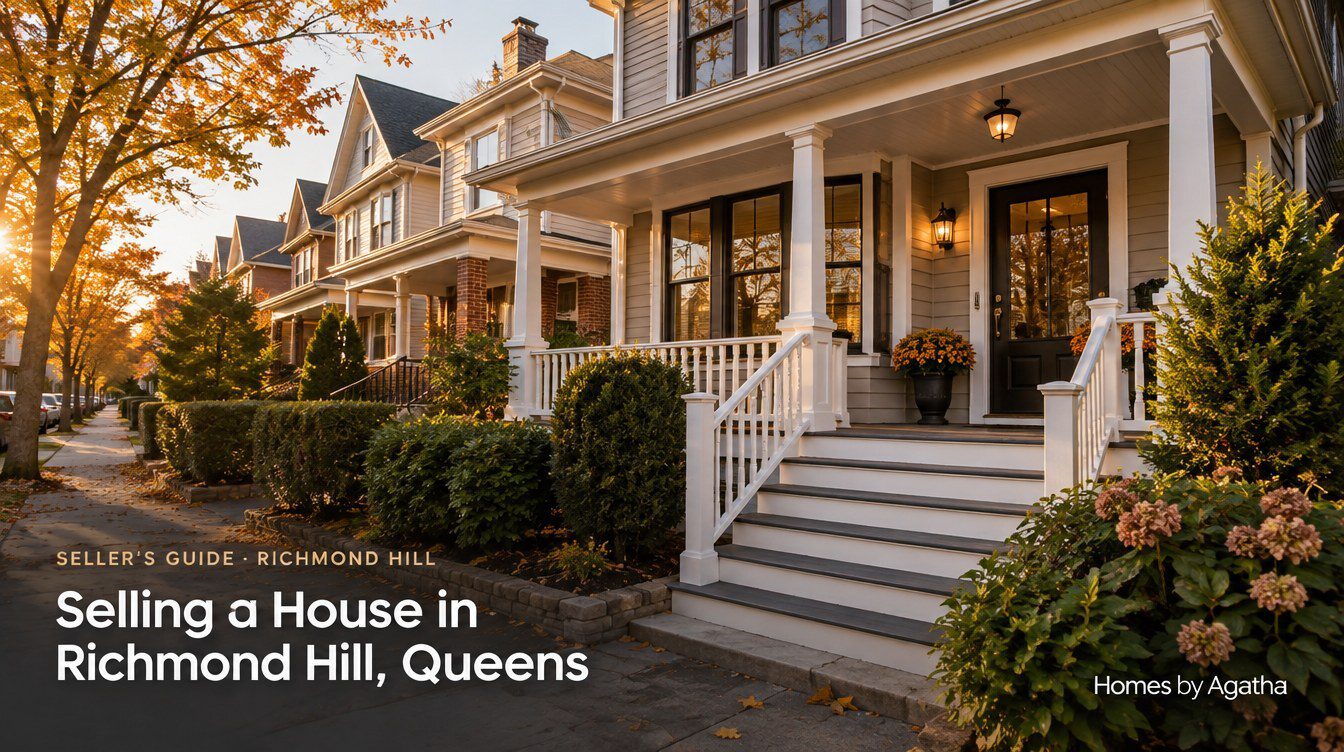
For a Victorian, staging means letting the architecture show: clear the porch, repair and paint where needed, open the rooms that show original woodwork and windows, and reduce furniture so bay windows and staircases read clearly in photos. For a two-family house, buyers need to picture both units: clean and paint a vacant unit, show each kitchen and bathroom, and present the owner’s unit as a home rather than storage.
Present below-grade and attic space honestly
Basements and attics are where unapproved apartments are most often found. Under New York City rules, a cellar, more than half below curb level, generally cannot be a legal apartment, and a basement can be habitable only if it meets strict height, light, ventilation and exit rules. Describe these spaces in line with the legal records, such as “finished basement” rather than “basement apartment,” unless the records approve a dwelling unit.
Lead paint in older homes
If your house was built before 1978, federal law requires you to disclose known lead-based paint hazards and provide available records. Repainting before a sale is fine, but sanding or scraping old paint calls for certified lead-paint work practices.
Want a repair list that fits your budget?
We can walk the house together and rank each item by what Richmond Hill buyers, inspectors and appraisers are most likely to notice.
How should a Richmond Hill house be marketed?
A Richmond Hill house should be marketed with professional photography that shows the architecture and the lot, an accurate floor plan, a listing on OneKey MLS that flows to the major portals, and a description that states the legal configuration, updates and transit options precisely.
Photography, floor plans and the lot
Wide-angle interior photos alone do not sell a Victorian. Include the porch, the facade at a flattering hour, period details such as stained glass or a staircase, the yard and the driveway or garage. A floor plan helps buyers understand irregular layouts and, for a two-family house, which rooms belong to which unit.
OneKey MLS and online distribution
OneKey MLS is the multiple listing service used by brokers across Queens, Long Island and other parts of the New York region. A listing entered there is shared with participating brokers and syndicated to consumer real estate websites, so most buyers and their agents see it within the same day. Accuracy matters because the same data is repeated everywhere.
Describing character and transit accurately
Write what is true and verifiable: “detached Queen Anne-style frame house,” “inside the National Register-listed Richmond Hill Historic District” if confirmed, “legal two-family per DOB records,” “about a ten-minute walk to the 111 St J station” only if measured. Avoid claims that cannot be documented and any description of who lives nearby. Fair housing rules require that marketing describe the property and its features, not the people a seller expects to attract.
Showings around the house and the line
For homes near Jamaica Avenue, schedule some showings when the J and Z are running, so buyers experience the street as it is and do not feel misled later. For tenant-occupied units, give notice under the lease and New York law, and show respectfully.
If you are selling a co-op apartment
Selling a co-op apartment adds a board step: the buyer submits a board package with financial documents and usually attends an interview, and the board can approve or reject the sale. Any flip tax, a fee some co-ops charge on transfers, is set by that building’s own documents; there is no city-wide rate. Ask the managing agent for the building’s requirements before you list.
What disclosures does a Richmond Hill seller have to make?
Most sellers of one-to-four-family houses in New York must deliver the Property Condition Disclosure Statement, sellers of homes built before 1978 must provide the federal lead-based paint disclosure, and real estate licensees must give the NYS Disclosure Form for Buyer and Seller at the first substantive contact.
The Property Condition Disclosure Statement
The Property Condition Disclosure Statement (PCDS) is a New York State form in which the seller answers questions about the property’s condition, systems and known problems based on actual knowledge. Since March 20, 2024, a change in New York law removed the option of giving the buyer a $500 credit instead of delivering the form, so most sellers of one-to-four-family houses must now provide it. Co-op and condo units are generally outside the requirement; confirm how it applies to your unit with your attorney. Answer carefully and review it with your attorney; in an older house, “unknown” may be the honest answer for hidden conditions, but known issues must be disclosed.
Lead-based paint and agency disclosures
For homes built before 1978, the seller provides a lead-based paint disclosure and any available reports, and buyers have an opportunity to conduct a lead inspection or risk assessment. Separately, the NYS Disclosure Form for Buyer and Seller explains whether your licensee represents you as a seller’s agent and how dual agency or other arrangements would work. The NYS Housing and Anti-Discrimination Disclosure form is also provided in residential transactions.
Key Takeaways
- Gather legal-use, permit, tank and system records before listing, not after an offer.
- Repair what inspectors and lenders will flag; leave full restorations to the buyer.
- Market the legal configuration and historic status exactly as the records show.
- Most one-to-four-family sellers must deliver the PCDS; the $500 credit option ended in 2024.
Planning how to launch your listing?
We can build a listing strategy around your house’s records, photography and showing schedule, so the first week on the market is accurate and complete.
What does it cost to sell a house in Richmond Hill?
When selling a house in Richmond Hill Queens, the seller typically pays the New York State real estate transfer tax, the NYC Real Property Transfer Tax, brokerage compensation as negotiated, the seller’s attorney fees, and the payoff of any mortgage or lien, plus the cost of resolving violations and any agreed credits. The exact total depends on the price, the property type and the contract.
Transfer taxes
The New York State real estate transfer tax, administered by the NYS Department of Taxation and Finance, is $2 for each $500 of consideration (0.4%) and is customarily paid by the seller. Because Richmond Hill is in New York City, the NYC Real Property Transfer Tax also applies; according to the NYC Department of Finance, the rate for residential one-to-three-family homes, individual co-op units and condo units is 1% when the price is $500,000 or less and 1.425% when it is above $500,000, customarily paid by the seller. Four-family and mixed-use buildings are taxed differently: for those and other transfers outside the one-to-three-family, co-op and condo category, the NYC Department of Finance lists rates of 1.425% when the price is $500,000 or less and 2.625% above $500,000. The NYS “mansion tax” on purchases of $1 million or more is paid by the buyer. Confirm current rates with the NYS Department of Taxation and Finance and NYC Department of Finance before closing.
| Seller expense | Source or basis | Notes for a Richmond Hill sale |
|---|---|---|
| NYS real estate transfer tax | NYS Department of Taxation and Finance | 0.4% of the consideration, customarily paid by the seller |
| NYC Real Property Transfer Tax | NYC Department of Finance | 1% up to $500,000, 1.425% above, for one-to-three-family homes, co-op and condo units |
| Brokerage compensation | Listing agreement | Negotiable; any contribution toward the buyer’s agent is a separate, written decision |
| Seller’s attorney | Engagement agreement | Contract, title issues, estate or tenant matters |
| Mortgage payoff and liens | Lender payoff letter, title report | Includes any judgments or municipal charges found in the title search |
| Violation and permit clean-up | DOB, OATH records | Architect or expediter fees if old work must be signed off |
| Adjustments and credits | Contract | Prorated taxes and water; any negotiated repair credit |
| Co-op items (apartments only) | Building documents | Flip tax if the building has one; move-out and processing fees |
For a fuller breakdown, see Queens closing costs explained. Questions about capital gains or estate taxes belong with a CPA.
Brokerage compensation after the 2024 settlement
Under the rules in effect in 2026, following the 2024 NAR settlement, brokerage compensation is negotiable and not set by law. Buyer-agent compensation is not automatically paid by the seller; buyers sign written agreements with their own agents before touring. A seller may choose to offer a contribution or a credit toward the buyer’s costs, and any such arrangement should be agreed in writing.
How do you compare offers on an older Richmond Hill house?
Compare offers on net proceeds and on the likelihood of closing, not on price alone. For an older or one-of-a-kind house, the financing type, the appraisal risk and the buyer’s inspection expectations can matter as much as the headline number.
| Offer element | What to look at | Why it matters for an older Richmond Hill house |
|---|---|---|
| Price and net proceeds | Price minus credits, taxes and costs | A higher price with large credits may net less |
| Financing | Cash, conventional or government-backed; down payment size | Some loan programs have stricter property-condition standards |
| Appraisal risk | Down payment cushion; willingness to cover a gap | Few close comparables can mean a lower appraisal |
| Pre-approval quality | Letter matched to the property type | A one-family approval may not fit a legal two-family |
| Inspection expectations | Has the buyer seen and accepted the house’s age? | Avoids renegotiation over expected wear |
| Closing date and possession | Fit with your move, an estate timeline or tenant plans | Flexibility can be worth more than a small price difference |
Negotiating after inspection
In New York, buyers usually inspect before signing the contract, so inspection findings arrive while terms are still open. Decide in advance which items you would fix, which you would credit and which you would decline, based on your records. A buyer who asks for a credit for a 30-year-old boiler is negotiating; a buyer who finds an undisclosed active leak has a point.
An accepted offer is not a contract
New York is an attorney state for residential sales. Once you accept an offer, your attorney and the buyer’s attorney negotiate the contract of sale, and the deal binds only after both parties sign and the buyer’s deposit is delivered. Until then, either side can walk away, which is why a complete records file and an honest disclosure statement help keep a deal together.
Holding more than one offer?
Send me what you have received, and we can compare net proceeds, financing fit and appraisal risk side by side before you respond.
What is the timeline from listing to closing in Richmond Hill?
A typical sale moves through preparation, listing and showings, offer and attorney review, contract signing, the buyer’s mortgage and title work, and closing. The steps most likely to slow an older Richmond Hill house are records clean-up before listing and appraisal or title questions after contract.
| Stage | What happens | Older-house risk to manage |
|---|---|---|
| 1. Preparation | CMA, records file, repairs, photography | Open permits or violations that take months to close |
| 2. Listing and showings | OneKey MLS launch, showings, open houses | Descriptions that overstate units or historic status |
| 3. Offer and acceptance | Terms agreed in principle; not binding | Pre-approvals that do not match the property type |
| 4. Inspection and contract | Buyer’s inspection, attorney review, signatures, deposit | Wiring, tank or sewer findings reopening price |
| 5. Mortgage and title | Appraisal, underwriting, title and municipal searches | Low appraisal; liens or municipal charges |
| 6. Closing | Final walkthrough, payoff, deed recorded, transfer taxes paid | Lease and deposit transfers; agreed repairs completed |
Exact timing depends on the buyer’s lender, the records and both attorneys’ schedules. Cash sales can move faster; estate sales and houses with open DOB items often move slower.
What mistakes do Richmond Hill sellers make, and what belongs on your checklist?
The costliest seller mistakes are pricing an unapproved unit as income, listing before the records file is ready, and over-renovating a house whose buyers want to choose their own finishes. Each one shows up later as a renegotiation or a delay.
Common seller mistakes
- Advertising more units than the records allow. Lenders and appraisers follow the records, not the listing.
- Calling the house “landmarked” without checking. National Register listing and NYC landmark designation are different.
- Pricing from the wrong comparables. A restored Victorian and a 1920s attached house are different markets.
- Treating the PCDS casually. It is required for most one-to-four-family sales, and accurate answers protect you.
- Promising a vacant unit without legal advice. Tenancies end only as the lease and New York law allow.
- Ignoring nearby markets. Buyers often compare your house with listings in Woodhaven, Kew Gardens and Jamaica; know what they are seeing.
Richmond Hill seller checklist
- Request a CMA based on homes of the same type, legal unit count and condition.
- Pull your CO or Letter of No Objection, DOB permits and violations, and tax records.
- Confirm LPC and National Register status before mentioning history in marketing.
- Collect invoices for roof, boiler, electrical and plumbing work, plus oil-tank paperwork.
- Gather leases, deposits and utility details for any rented unit.
- For an inherited house, confirm the executor’s or administrator’s authority with an estate attorney.
- Repair leaks, electrical hazards and porch or step defects; service the boiler.
- Complete the PCDS with your attorney, plus the lead-based paint disclosure if built before 1978.
- Schedule professional photography and a floor plan.
- Estimate net proceeds, including NYS transfer tax and NYC Real Property Transfer Tax.
- Compare offers on net proceeds, financing fit and appraisal risk, then let attorneys draft the contract.
If you plan to buy again in the area, the companion guide to buying a home in Richmond Hill explains the purchase side, including the due diligence your own buyers will perform.
Frequently asked questions about selling a house in Richmond Hill, Queens
How do I find out what my Richmond Hill house is worth?
Start with a comparative market analysis from a broker who compares your house with recent sales of the same building type, legal unit count, lot size and condition. In Richmond Hill, detached Victorians may need comparables from nearby Woodhaven or Kew Gardens. A CMA is an opinion of value, not an appraisal or a guarantee.
What taxes does a seller pay when selling a house in Richmond Hill?
A Richmond Hill seller customarily pays the NYS real estate transfer tax of 0.4% and the NYC Real Property Transfer Tax, which for one-to-three-family homes, co-op and condo units is 1% up to $500,000 and 1.425% above. Four-family and mixed-use buildings may differ. Confirm current rates with NYS DTF and NYC DOF.
Do I need a Certificate of Occupancy to sell an old house in Richmond Hill?
Not always. Buildings constructed before 1938 generally did not need a Certificate of Occupancy unless later alterations changed their use, exits or occupancy. Many Richmond Hill houses are that old. A Letter of No Objection from the NYC Department of Buildings can confirm legal use. Gather these records before listing to avoid delays.
Can I say my house is in a historic district when I sell?
Yes, if it is true. Part of Richmond Hill is the Richmond Hill Historic District, listed on the National Register of Historic Places in 2019. That listing differs from NYC landmark designation by the Landmarks Preservation Commission. Confirm your address’s status with the LPC and the NYS Historic Preservation Office before using it in marketing.
Should I renovate my Victorian house before selling it?
Usually not fully. Repair items inspectors and lenders flag, such as roof leaks, electrical hazards, rotted porch boards and failing steps, and service the boiler. Clean, paint and declutter so original details show. Full kitchen or bath remodels rarely pay back before a sale, and many buyers of older houses prefer choosing their own finishes.
Is the Property Condition Disclosure Statement required in Richmond Hill?
Yes, for most one-to-four-family houses. Since March 20, 2024, New York sellers can no longer give a $500 credit instead of delivering the Property Condition Disclosure Statement. Co-op and condo units are generally outside the requirement. Houses built before 1978 also need the federal lead-based paint disclosure. Review both forms with your attorney.
Can I sell my Richmond Hill two-family house with a tenant in it?
Yes. A two-family house can be sold with a tenant in place, and existing leases and security deposits generally transfer to the buyer at closing. Some buyers want an occupied unit for income; others need it vacant to move in. Ask your attorney whether delivering a vacant unit is possible under the lease and New York law.
How do I sell an inherited house in Richmond Hill, Queens?
The executor or administrator usually needs authority from the Queens County Surrogate’s Court, such as letters testamentary or letters of administration, before signing a contract. Work with an estate attorney to confirm authority and coordinate heirs, gather the house’s legal-use and repair records, and ask a CPA about tax considerations before the sale.
Who pays the buyer’s agent when I sell in Richmond Hill?
It depends on what is negotiated. Under the rules in effect in 2026, buyer-agent compensation is negotiable, not set by law and not automatically paid by the seller. Buyers sign written agreements with their own agents. A seller may choose to contribute toward that compensation or offer a credit, and any arrangement should be in writing.
Does being near the J train affect selling a house in Richmond Hill?
Distance to the J and Z stations at 104 St, 111 St and 121 St influences how buyers and renters see a Richmond Hill house. A short walk can widen interest, while houses facing the elevated structure on Jamaica Avenue should be shown when trains are running, so buyers experience the street honestly.
Your next step in Richmond Hill
Selling a house in Richmond Hill Queens goes more smoothly when the house’s story is documented before it is marketed. Price against homes of the same type and legal configuration, assemble the legal-use and systems file, repair what inspectors will flag, describe the architecture and history accurately, deliver the required disclosures, and judge offers on net proceeds and closing risk. When you are ready to plan the listing, the page on how to sell your home in Richmond Hill, Queens explains how we can work together.
Map your Richmond Hill sale from first call to closing
Share a few details about your house, and I will outline a timeline, preparation priorities and a net-proceeds estimate, in English or Polish.
This article is for general informational purposes only and reflects conditions that may change. It is not legal, tax, or financial advice, an appraisal, or a guarantee of price or outcome; consult a licensed New York attorney, a CPA, and an NMLS-registered mortgage loan originator as appropriate. A CMA is an opinion of value, not an appraisal. Real estate brokerage services are offered by Agatha Lubas, Licensed Associate Real Estate Broker, NY License #10301213345, Keller Williams Realty Liberty, 96-10 101st Avenue, Ozone Park, NY 11416. The NYS Disclosure Form for Buyer and Seller, the NYS Housing and Anti-Discrimination Disclosure / Fair Housing Notice, and the brokerage’s Standard Operating Procedures are available on request. Equal Housing Opportunity.

Agatha Lubas helps sellers, buyers and investors across Queens, Brooklyn, Nassau County and Suffolk County plan transactions from pricing through closing. She works in English and Polish so clients can communicate in whichever language they find most comfortable.
Work with Agatha